
Read Lumpkin County Deed Types
The Lumpkin County Clerk of Superior Court Real Estate Division receives, records, indexes, and microfilms deeds. It also handles other real-estate instruments. Document type matters a great deal. A conveyance deed may transfer an interest outright. A security deed backs a loan instead. A cancellation can then release that secured claim without touching ownership at all.
| Deed Type | What It Does | Common Use |
|---|---|---|
| Warranty deed | Conveys the stated interest with written covenants | An ordinary arm's-length transfer |
| Quitclaim deed | Conveys whatever interest the grantor has, if any | Family, entity, or chain cleanup |
| Executor or administrator deed | Conveys through a fiduciary acting for an estate | A probate-related transfer |
| Security deed | Secures a debt under Georgia recording practice | Financing, not proof of a sale by itself |
| Tax deed | Records a stage following a tax sale | Tax enforcement requiring further title review |
Open the image and read the parties' roles and the legal description yourself. A label alone cannot prove the index hit concerns the parcel you care about. A recorded tax deed raises its own caution. Redemption, litigation, or another conveyance may follow it. So the filing alone never settles marketable title.
Lumpkin County Deeds in GSCCCA
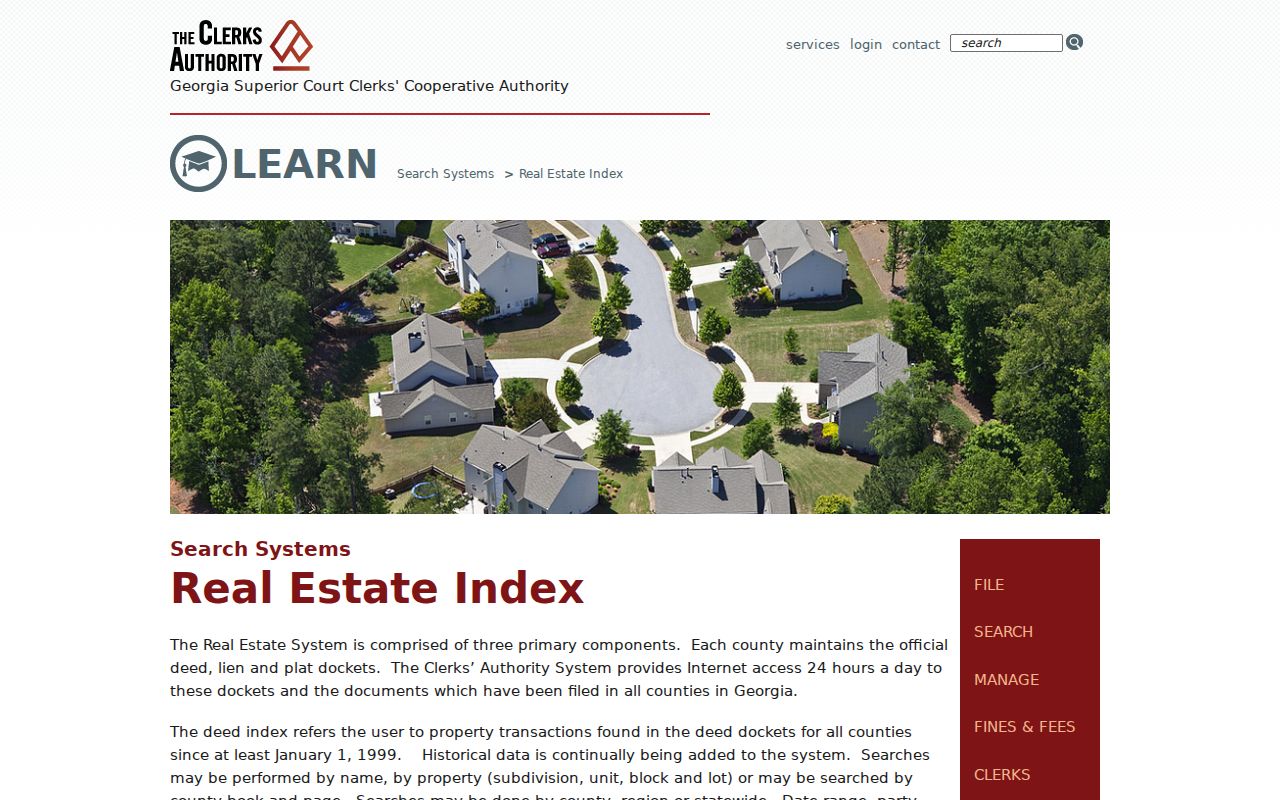
The GSCCCA Real Estate Index is the statewide doorway into deed records. Depending on account and docket, it supports name, book and page, instrument type, PT-61, and address searches. Subdivision, lot, map, and daily-transaction searches also work. Statewide indexing reaches every Georgia county from 1999 onward. Treat that date as a system milestone. It does not promise that every older Lumpkin County image sits online. The official deed-index source separates the index from the record image. That separation is why a summary result is only the start.
Before opening any document, write down the county, party, instrument type, recording date, and book and page or instrument number. Those details let clerk staff pull the exact same filing for you at the counter.
Search Lumpkin County Deed Fields
A narrow query beats a broad one. Start with a tight county and time period, then loosen spelling only if the expected transfer refuses to appear.
| Index field | What to enter | What to verify |
|---|---|---|
| Party name | Grantor, grantee, entity, estate, or trustee | Role, spelling, suffix, and date range |
| Book and page | Reference copied from a deed or parcel card | County, document type, and image |
| Instrument type | Warranty, quitclaim, security deed, assignment, release | Whether the filing transfers or encumbers |
| Land clue | Address, subdivision, lot, district, or land lot when offered | Match against the full legal description |
Search both roles whenever the chain is unclear. Georgia's lien docket also runs on direct and reverse roles. Never rewrite a creditor or security-deed result as the parcel owner. The owner of record comes from the conveyance, not the filing. Note: The latest dated deed image is stronger confirmation. An undated name copied from a summary screen carries less weight.
Walk Lumpkin County's Deed Chain
Grantor-grantee indexing tracks people and entities, not a tidy parcel timeline. Start from the newest confirmed conveyance. The current recipient shows as grantee. The transferor shows as grantor. Then follow that grantor back to the deed by which the same party first acquired the tract. Repeat the walk until the chain ends.
- Find the latest deed where the current owner appears as grantee.
- Read the grantor, recording date, legal description, and prior-instrument reference.
- Search that grantor as a grantee in the earlier period and compare the same land description.
- Repeat until the online index ends, then continue through clerk books, microfilm, or archival finding aids.
- Grantor
- The party transferring the stated interest.
- Grantee
- The party receiving the stated interest.
- Chain of title
- The linked sequence of recorded conveyances for the same land.
- Book/page
- A volume and page citation used to retrieve a recorded document.
- Instrument number
- A filing identifier assigned by the recording system.
Older Lumpkin County Deed Books
The oldest Lumpkin County deed-book range has no confirmed local online cutoff. Earlier chain work may therefore shift away from GSCCCA. It moves to the Clerk's counter, deed books, and microfilm. The Clerk states that the Real Estate Division microfilms documents. It also provides deed and miscellaneous real-estate copies. A public filing terminal sits at 325 Riley Road, Room 108, Dahlonega.
For historical leads, the Georgia Archives microfilm guidance is a strong stop. The Chestatee Regional Library System's Lumpkin County Heritage Collection is another.
Lumpkin County Security Deeds and Liens
Georgia deed records demand careful vocabulary. A deed to secure debt, assignment, modification, cancellation, or release may sit right beside conveyance deeds in the same books. The GSCCCA lien index allows direct debtor and reverse creditor searching across county, regional, and statewide scope. Its stated index coverage begins January 1, 2004. Older liens may require local lien books or microfilm.
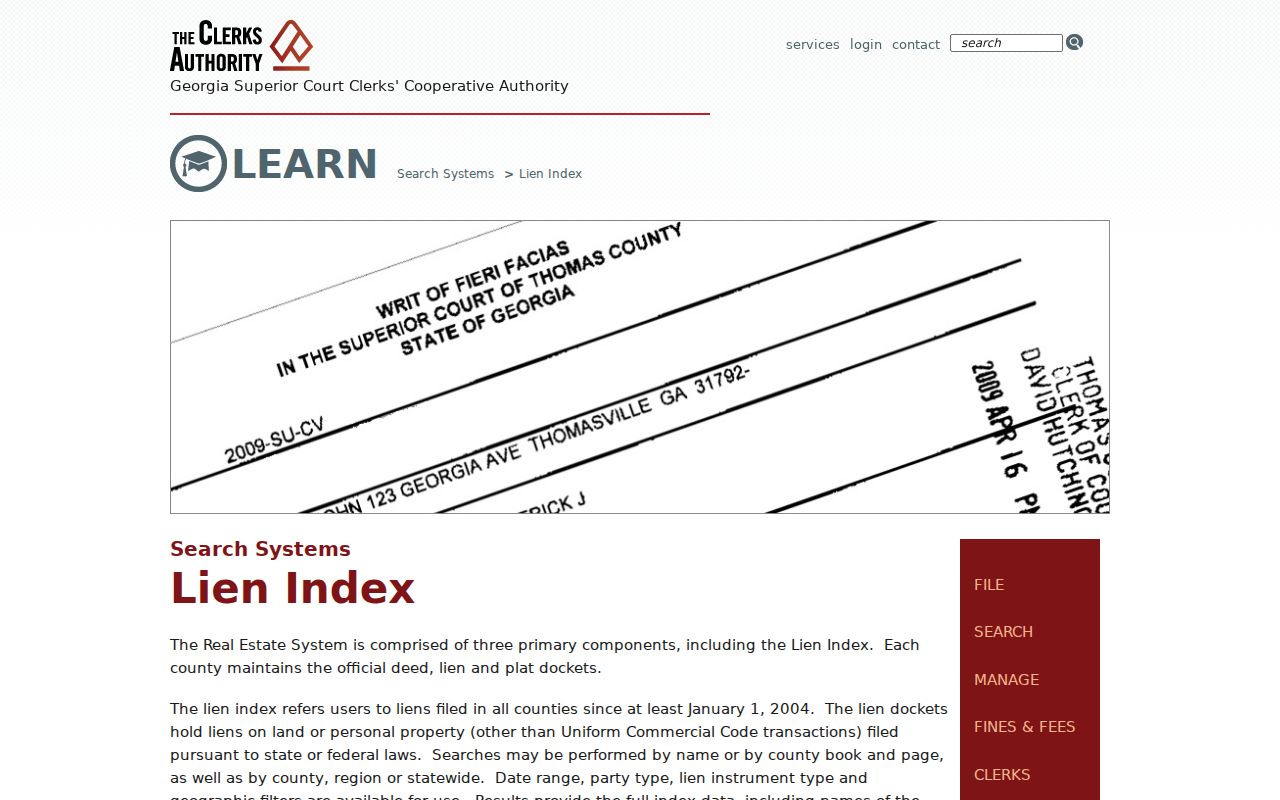
Always follow later releases and cancellations. An index entry proves only that a filing was indexed. It never proves that the debt remains unpaid. Compare the collateral or property description against the parcel in question. A same-name filing in Lumpkin County alone does not tie a lien to one tract.
Lumpkin County Deed Images and Accounts
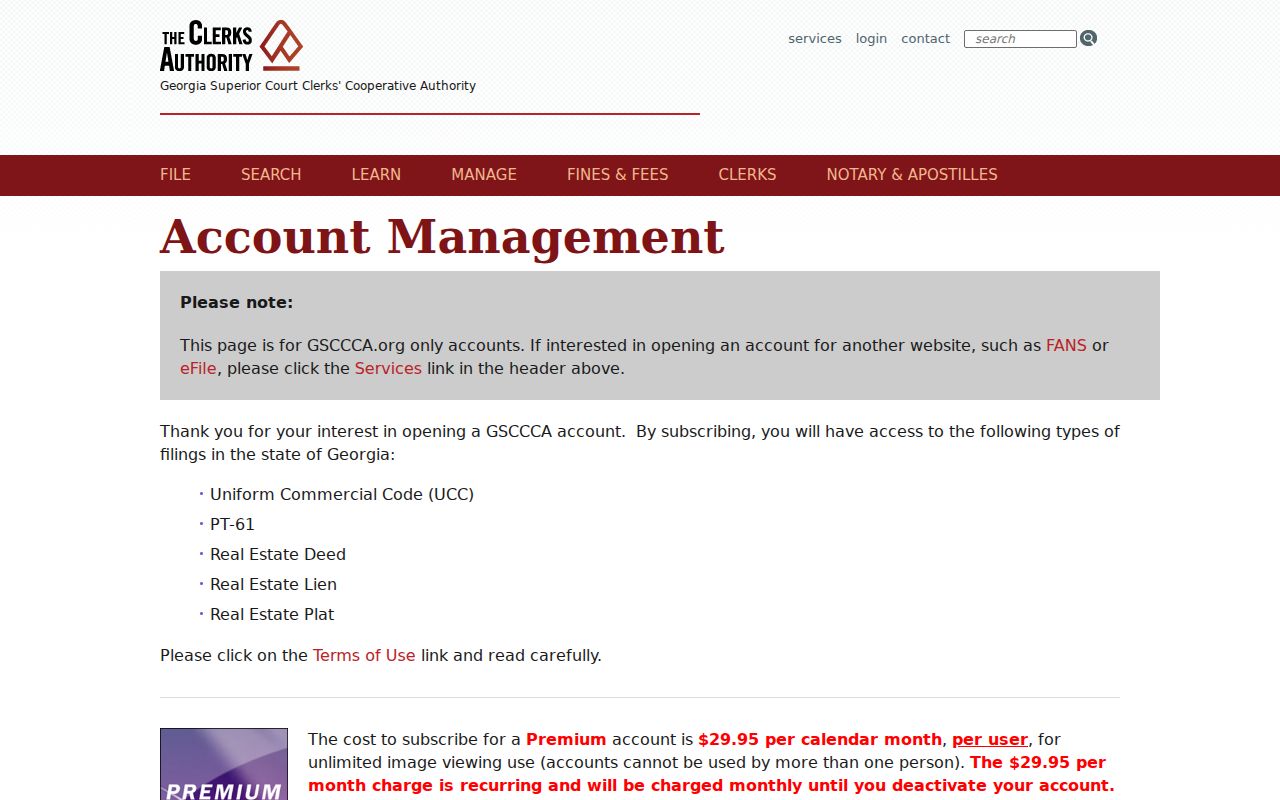
Your GSCCCA access level decides what you can actually see. The limited-use account carries no recurring fee. It offers search and summary, but no images or printing. A single-use account is listed at $5 for four consecutive hours. Images and printing run $0.50 per printed page. Premium access runs $29.95 per calendar month per user for unlimited image viewing. Confirm fees at checkout. The GSCCCA account page documents those tiers.
The clerk terminal is the practical fallback when a web image sits behind a paywall. Ask the Clerk for the current certified-copy fee and the request method before ordering. Lumpkin County publishes no separate certified-copy schedule online, so the counter is the word of record.
Electronic Lumpkin Real Estate Filing
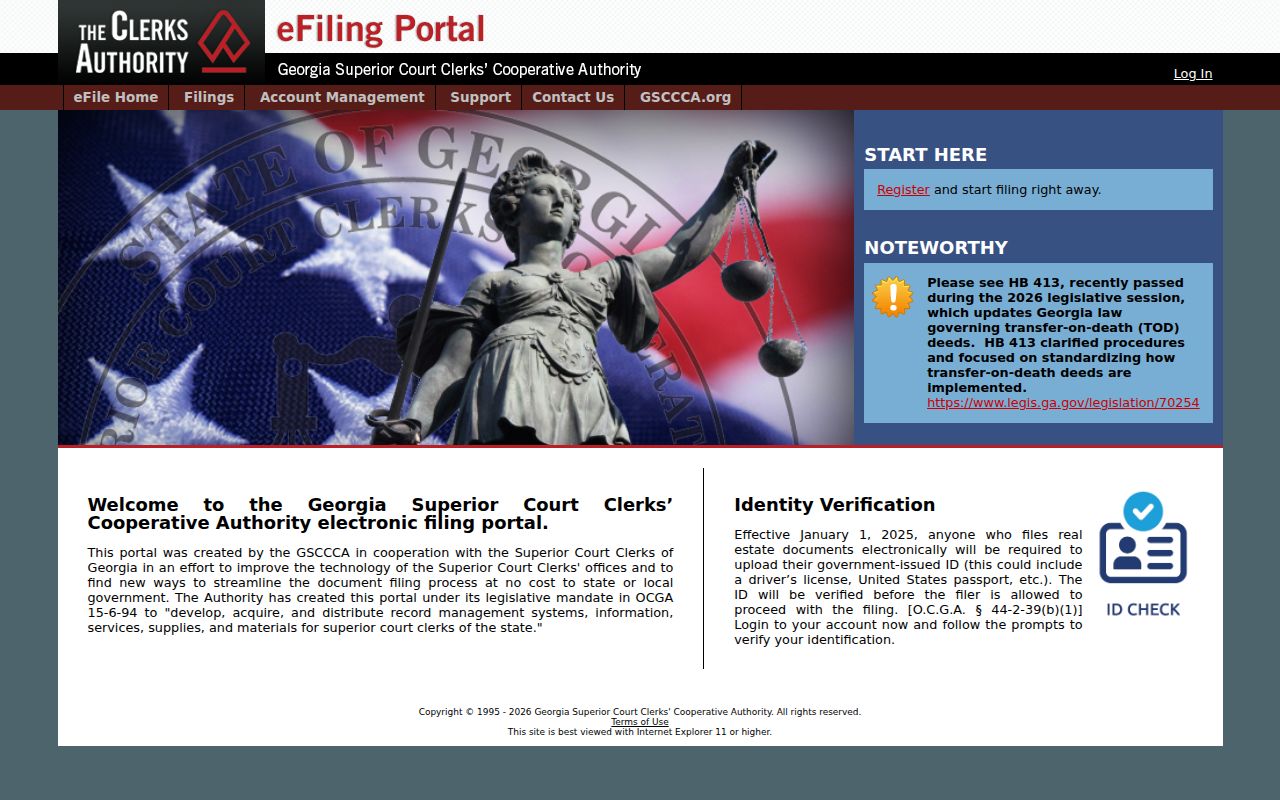
Lumpkin County accepts electronic real estate filing, including UCC documents. It does so through the GSCCCA eFile portal. Plats went fully electronic on January 1, 2017. The county requires plat images at 300 DPI. These rules govern how new instruments reach the record. They do not affect how deep the deed records run. For an existing deed, the search index or a clerk copy remains the better route.
A recorded plat explains what a deed means on the ground. It clarifies subdivision lots, easements, and rights-of-way. Still, it does not prove current ownership. A deed index line, likewise, does not settle a mapped boundary.
Obtain a Lumpkin County Deed
Order a deed copy through the GSCCCA image if your account allows it, or bring the book/page or instrument number straight to the Lumpkin County Clerk of Superior Court. The Real Estate Division sits at 325 Riley Road, Room 108, and welcomes visitors Monday through Friday, 8:00 a.m. to 5:00 p.m. Call 706-864-3736, extension 2426, with questions.
The Clerk's own page confirms the division supplies copies. It does not list the current certified-copy price or any remote request method. So call ahead with your exact citation. Ask about a plain or certified copy, delivery options, cost, and accepted payment. For older deeds, request the relevant deed book or microfilm range.
The official Clerk division page describes these services directly.
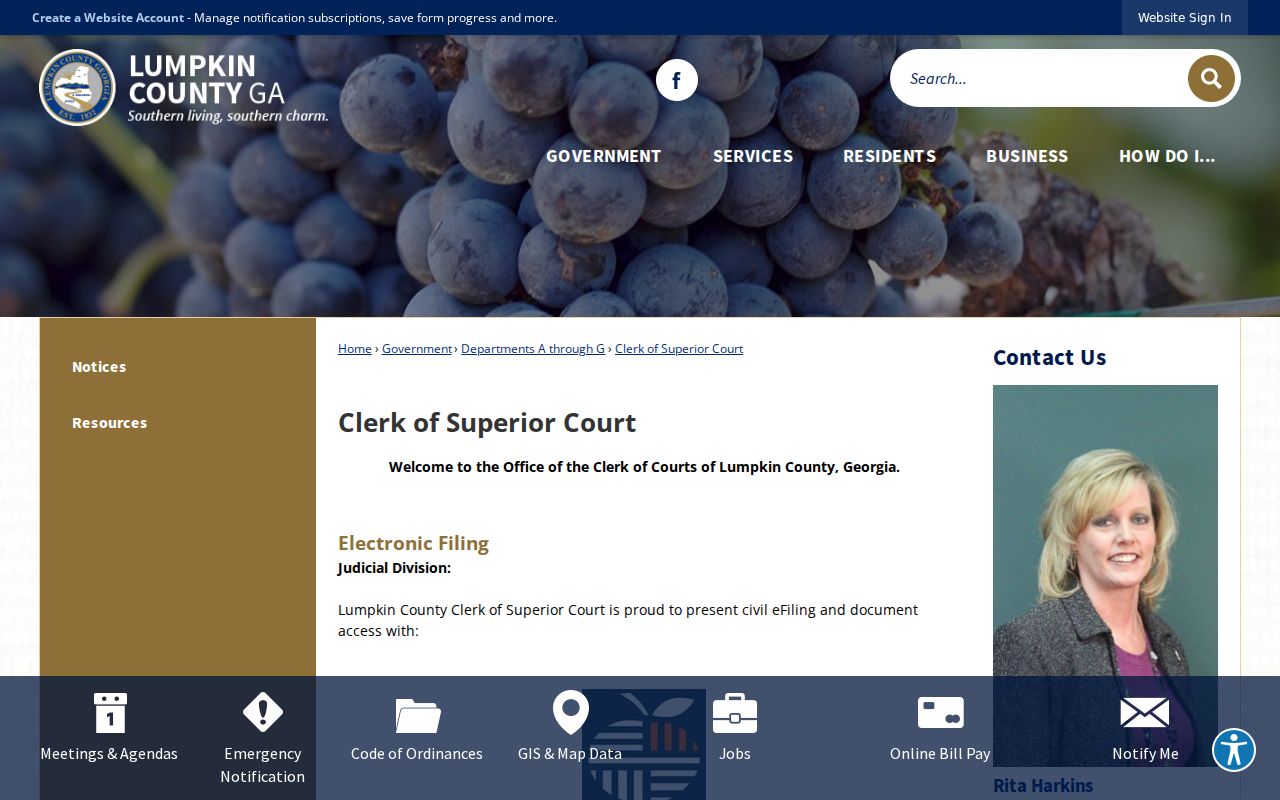
The official Clerk division page confirms the local custody route and a public terminal. A certified copy always comes from the custodian, never from a screenshot or a search summary.
Recorded is not guaranteed title. The Lumpkin County index shows filed instruments, while unrecorded interests, defects, and later legal issues may still require professional title review.
Watch New Lumpkin Filings
The GSCCCA Filing Activity Notification System is known as FANS. It sends alerts when filings hit selected names. It works as an early-warning tool against possible deed fraud. It does not block recording, and it proves nothing about an instrument's validity. An unfamiliar notice deserves a close look at the index entry and image. Then call the Clerk.
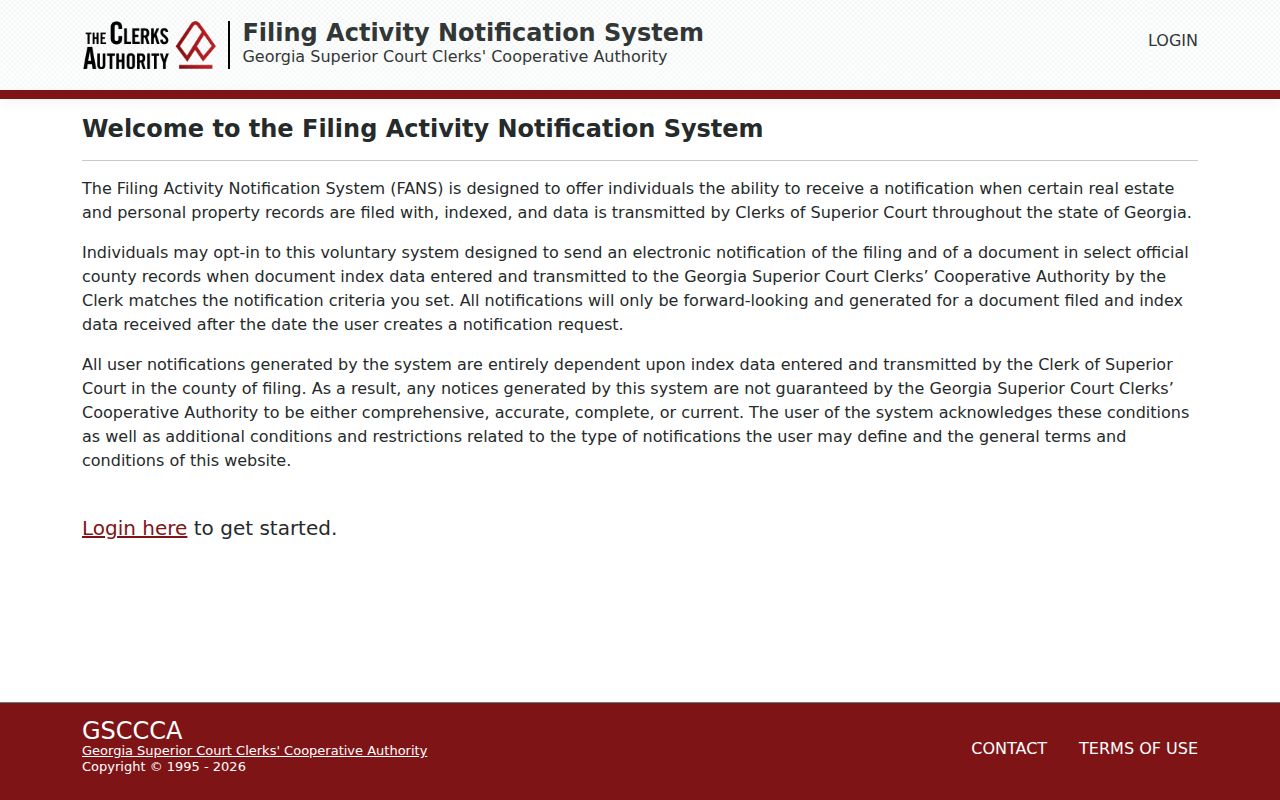
Name variants matter when registering. Sign up under the form a person, trust, estate, or entity will most likely use. No notification service catches every variation. Georgia Attorney General guidance warns that title theft schemes can involve forged documents. The schemes can also involve false claims. The record image and the custodian's response remain the key evidence.
Match Lumpkin Plats to Deeds
A deed often cites a recorded plat for its lot lines, roads, easements, and rights-of-way. The GSCCCA Plat Index is the separate statewide route for finding one. Lumpkin plats became mandatory eFile submissions in 2017. That cutoff says nothing about the oldest plat held locally. The official plat-index source appears here for reference.
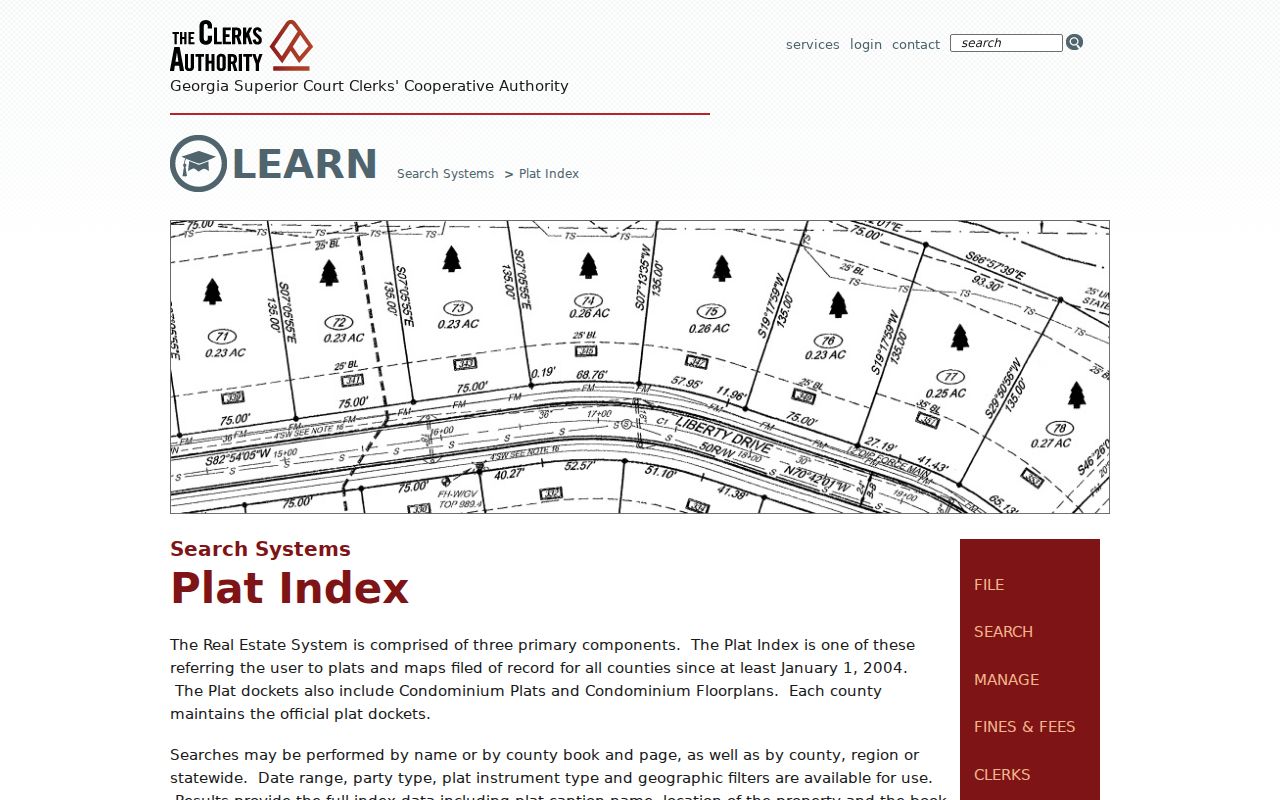
Check the plat caption against the deed. Match the subdivision or tract name, district, land lot, lot number, and recorded citation. A plat fixes the recorded layout at filing, but it cannot prove the present owner or replace a current boundary survey.